





Glasses for a High Prescription: Lenses, Frames and Fit
The best glasses for a high prescription combine three things: a lens material that keeps thickness and weight down, a smaller frame that suits your face, and precise measurements taken by a professional. Get those right and strong lenses can be thin, light and comfortable. Get one wrong and you end up with heavy edges, distortion or glasses that never feel quite right. Below we explain what counts as a high prescription, how lens options differ, which frames work, and what to ask when you shop.
TL;DR
- There is no single official cutoff, but myopia of -6.00D or stronger and hyperopia of +4.00D or stronger are generally treated as high prescriptions.
- High-index lenses make strong lenses thinner and lighter, but they cost more and can bring side effects such as peripheral distortion, colour fringing and more reflections.
- Smaller frames reduce lens thickness, and matching your pupillary distance to the frame keeps edges thinner.
- For high or complex prescriptions, the Canadian Association of Optometrists advises against buying glasses online and recommends a final fitting with an optometrist or optician.
- Bring your latest prescription to a clinic where the frames, lenses and measurements are handled together.
Table of Contents
- What counts as a high prescription?
- How a strong prescription changes your lenses
- High-index lenses: what you gain and what you give up
- Choosing frames for thick lenses
- Why measurements and fitting matter more with strong lenses
- Should you buy high-prescription glasses online?
- Questions to ask before you order
- Contact lenses as a companion to glasses
- Our perspective: strong lenses are a fitting problem, not a catalogue problem
- Book a fitting with Look Optometry
- Common mistakes with strong-prescription glasses
- FAQ
- Sources
What counts as a high prescription?
Nobody has set one universal line. As a working rule, myopia of -6.00D or higher and hyperopia of +4.00D or higher are generally regarded as high. You will see those numbers on your prescription under “sphere” (often shown as SPH). A minus sign means nearsighted, a plus sign means farsighted.
The label is less important than how the lenses behave. Opticians pay closer attention once a prescription reaches about +/-5.00D, because vertex distance, the gap between your eye and the back of the lens, starts to matter at that point. In some systems a lens counts as “complex” above +/-10.00D in any meridian. Those thresholds come from UK optical practice, so treat them as a guide to how seriously strong lenses are handled, not as a Canadian rule.
Astigmatism adds to the picture. The cylinder number on your prescription also thickens a lens along one direction. If yours is on the stronger side, our guide on what level of astigmatism requires glasses explains how to read it. If you are farsighted, our article on hyperopia covers why plus lenses behave differently from minus ones.
How a strong prescription changes your lenses
The shape of the lens depends on the direction of your prescription.
- Nearsighted (minus) lenses are thin in the centre and thicker at the edge. The stronger the prescription, the thicker the rim, which is what makes a heavy “coke bottle” look.
- Farsighted (plus) lenses are thickest in the centre and thin at the edge. They can look bulging and make the frame feel front-heavy.
A frame that is smaller reduces lens thickness, particularly edge thickness for high myopia and centre thickness for high hyperopia. This is why frame choice is not just a style decision with a strong prescription. It is part of the optical design.
Thickness is only one side. Weight sits on your nose and ears all day, and the lens position changes how sharp your vision is when you look off to the side. A good fitting handles all three.
High-index lenses: what you gain and what you give up
High-index lenses are made from a material that bends light more efficiently, so less of it is needed for the same power. Standard plastic is the baseline, and higher indexes get progressively thinner.
Benefits. According to All About Vision, the upsides are a slimmer appearance, reduced lens weight and more frame options. The same page notes that people with a prescription of +/-3.00D or higher are ideal candidates, so you do not need to be in the high range to benefit.
Drawbacks. The same source lists higher cost, possible peripheral distortion and colour fringing, more reflections that can cause glare, and potentially less impact resistance than some other lens materials. Professional guidance echoes the trade-off: some patients may not tolerate the increase in lens aberrations that come with thinner high-index lenses, even though they look better.
In practice, that means:
- Ask for an anti-reflective coating. Because high-index lenses reflect more light, a coating helps reduce the glare issue.
- Ask about lens design. Your optician can discuss how the curve of the lens affects the edges of your field of view.
- Think about the activity. If the glasses are for children or for sports, durability matters as much as thinness.
Thinner is not automatically better for you. The right index is the one that balances appearance, clarity and budget for your specific numbers.
Choosing frames for thick lenses
The frame decides how much lens material is needed to fill it. A few principles help.
Go smaller, and keep the shape simple
Smaller rounded or oval frames generally suit thicker prescriptions, because less lens surface means less thickness at the edge for minus lenses and less bulge for plus lenses. Very large or wide frames push the outer edge farther from the centre of the lens, which is exactly where minus lenses get thick.
Match the frame to your pupillary distance
Your pupillary distance (PD) is the measurement between your pupils. When it matches the centre of the frame’s lens opening, there is less need to shift the lens position, which keeps edge thickness to a minimum. A frame that is too wide for your PD forces the lens off-centre and adds thickness on one side.

Consider the rim style
Thick edges are easier to hide in a full-rim frame that covers them. Rimless and thin metal frames show the edge, which can make a strong minus lens more obvious. Think about whether you want the edge hidden or whether you are happy with a thinner high-index lens that makes it less noticeable.
Look at the fit, not just the look
Correct adjustment matters as much as the frame itself. Frame adjustments such as pantoscopic tilt of roughly 8 to 12 degrees and the right vertex distance keep the optical centre aligned as your gaze moves. A frame that slides down your nose or sits crooked changes the effective power you see.
You can browse our frames collection to see the shapes available, then try them on with an optician who can tell you which ones will work with your lenses.
Why measurements and fitting matter more with strong lenses
With a low prescription, small errors in measurement go unnoticed. With a strong one, they do not. The Canadian Association of Optometrists points out that lens selection requires careful analysis of the relationship between lens and frame, since size and shape directly affect performance and comfort.
The measurements involved include:
- Pupillary distance, measured for each eye
- Optical centre height, so the strongest part of the lens sits in front of your pupil
- Frame size and shape
- Lens curvature, material and coatings
- Frame adjustment, including tilt and vertex distance
Standards exist for the finished product. The national eyeglass tolerance chart, based on ANSI Z80.1-2010, sets tolerances for lens power, prism and mechanical factors. But those standards cover the lens once it is made. They do not dictate how precisely the initial measurements are taken, and that remains the responsibility of the person doing the fitting. In Canada, opticians are licensed after they pass national practical examinations used by provincial regulators, and the national competencies expect them to use mathematical calculations to select frames and lenses for high-power prescriptions.
Should you buy high-prescription glasses online?
Online retailers are convenient and can be good for simple prescriptions. For a strong one, the advice from the profession is cautious. The Canadian Association of Optometrists says that for people with high or complex prescriptions, buying glasses online is not recommended because precise, professional measurements are needed, and it recommends a final fitting with an optometrist or optician.
That matches what the previous sections show. Centring, tilt and vertex distance are hands-on checks. A website can take a PD from a photo, but it cannot adjust the frame on your face or check where the lens sits in front of your eye.
If you do order elsewhere for any reason, ask a clinic to verify the finished glasses and adjust them. Provincial rules for optometrists, such as Alberta’s guidance on dispensing, say that when they dispense glasses they must help with frame and lens parameters based on your visual needs and ensure the glasses are fitted and verified within accepted tolerances. Whichever province you are in, it is a reasonable standard to expect.
Questions to ask before you order
Bring this list to your appointment:
- Is my prescription in the high range, and which lens index do you recommend for it?
- What will my lenses look like in this frame, and would a smaller size help?
- Will you measure my PD and optical centre height in person?
- Which coatings do you recommend, especially an anti-reflective one?
- How will the lens curve and design affect my side vision?
- Can you adjust the frame so tilt and vertex distance are correct?
- What happens if I have trouble adapting in the first weeks?
A good clinic welcomes these questions. If you get vague answers, that is a signal to ask again or go elsewhere.
Contact lenses as a companion to glasses
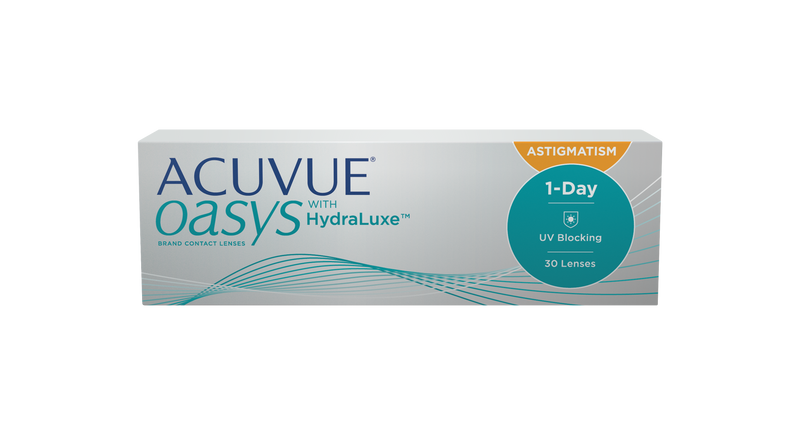
Many people with strong prescriptions wear glasses and contact lenses in different situations. Contact lenses sit directly on the eye, so they avoid the lens thickness and the edge distortion that glasses can bring, and they do not change how large or small the world looks in the same way. Not every eye suits every lens, though, and strong prescriptions or astigmatism may call for a specific design. Our types of contact lenses guide is a good start, and our contact lens fittings page explains the specialty options we fit, including scleral lenses. If you also have astigmatism, you can look at Acuvue Oasys for Astigmatism in our shop once you have a current prescription.
Our perspective: strong lenses are a fitting problem, not a catalogue problem
We see many patients who have been frustrated by thick, heavy or uncomfortable glasses. In most cases the lens material was only part of the story. The frame was too large, the measurements were rough, or nobody explained the trade-off between thin lenses and clarity at the edges.
Our approach is to treat a high prescription as a clinical question first. That starts with a thorough eye exam so the prescription itself is right, then a frame and lens discussion that fits how you live: screens, driving, sport, or glasses for a child. Because we are an optometry clinic that also carries a wide selection of frames, you can have the prescription, the fitting and the choice of frames in one place, and you can come back to us for adjustments.
We would also say this plainly: thinner is not always better, and the cheapest option for strong lenses is rarely the most comfortable. If your numbers are changing quickly, especially in a child or teen, tell us. Rapidly progressing nearsightedness is something we can address through myopia management, not just by making thicker lenses each year.
— Dr
Book a fitting with Look Optometry
If you live in Surrey or nearby, we can help from exam to finished glasses. Your visit starts with a comprehensive eye exam at our Newton or Guildford location, so the prescription is confirmed before any lenses are made. From there we can talk through lens materials, frame sizes and coatings, and help you choose from our frames collection. Pricing for exams and eyewear is not published online, so contact us for details and ask about direct billing when you book.

Common mistakes with strong-prescription glasses
- Choosing a frame first and the lens second. Pick the frame with your prescription in mind, not after.
- Going large for fashion. Oversized frames add edge thickness for minus lenses and weight overall.
- Skipping the anti-reflective coating on high-index lenses. They reflect more light, so glare is more noticeable without it.
- Accepting a PD estimate. Measurements should be taken for your eyes and your chosen frame.
- Giving up in the first days. Strong lenses can feel different at first. Tell your optician early if something feels off, because small adjustments often fix it.
- Ignoring a change in your eyes. If your vision shifts quickly, book an exam rather than replacing lenses blindly. Our guide on how to fix bad vision explains your options.
FAQ
What is considered a high prescription for glasses?
There is no single definition. Myopia of -6.00D or higher and hyperopia of +4.00D or higher are generally regarded as high. Ask your optometrist where your numbers sit, since astigmatism and your frame choice also affect how thick the lenses will be.
Are high-index lenses worth it?
For many people, yes. They give a slimmer, lighter lens and open up more frame choices, and people at +/-3.00D or above are ideal candidates. The downsides are higher cost, possible distortion at the edges and more reflections, so an anti-reflective coating and a careful fitting matter.
What frames are best for thick lenses?
Smaller frames in simple rounded or oval shapes are usually the best starting point, because they reduce edge thickness for minus lenses and centre thickness for plus lenses. The frame should also match your PD so the lens is not pushed off-centre. An optician can show how different sizes will look with your specific lenses.
Can I buy glasses for a strong prescription online?
The Canadian Association of Optometrists does not recommend it for high or complex prescriptions, because precise professional measurements and a final fitting are needed. If you have a strong prescription, it is safer to have the glasses measured, made and adjusted by an optometrist or optician.
Sources
- Vol.19 How to Read an Eyeglass Prescription, Tokai Optical
- OA Corner Part 24, ABDO
- High-Index Lenses: What They Are and Who Might Need Them, All About Vision
- High Rx, Prism and Occupational Lens Fitting, Optogrid
- Lens selection, dispensing and fitting tips, Canadian Association of Optometrists
- Eyeglass tolerance charts, NACOR
- Step-by-Step PLAR Process, NACOR
- National Competencies for Canadian Opticians, NACOR
- Buying Glasses Online, Canadian Association of Optometrists
- Prospective or Existing Use of Spectacles, College of Optometrists of Alberta